




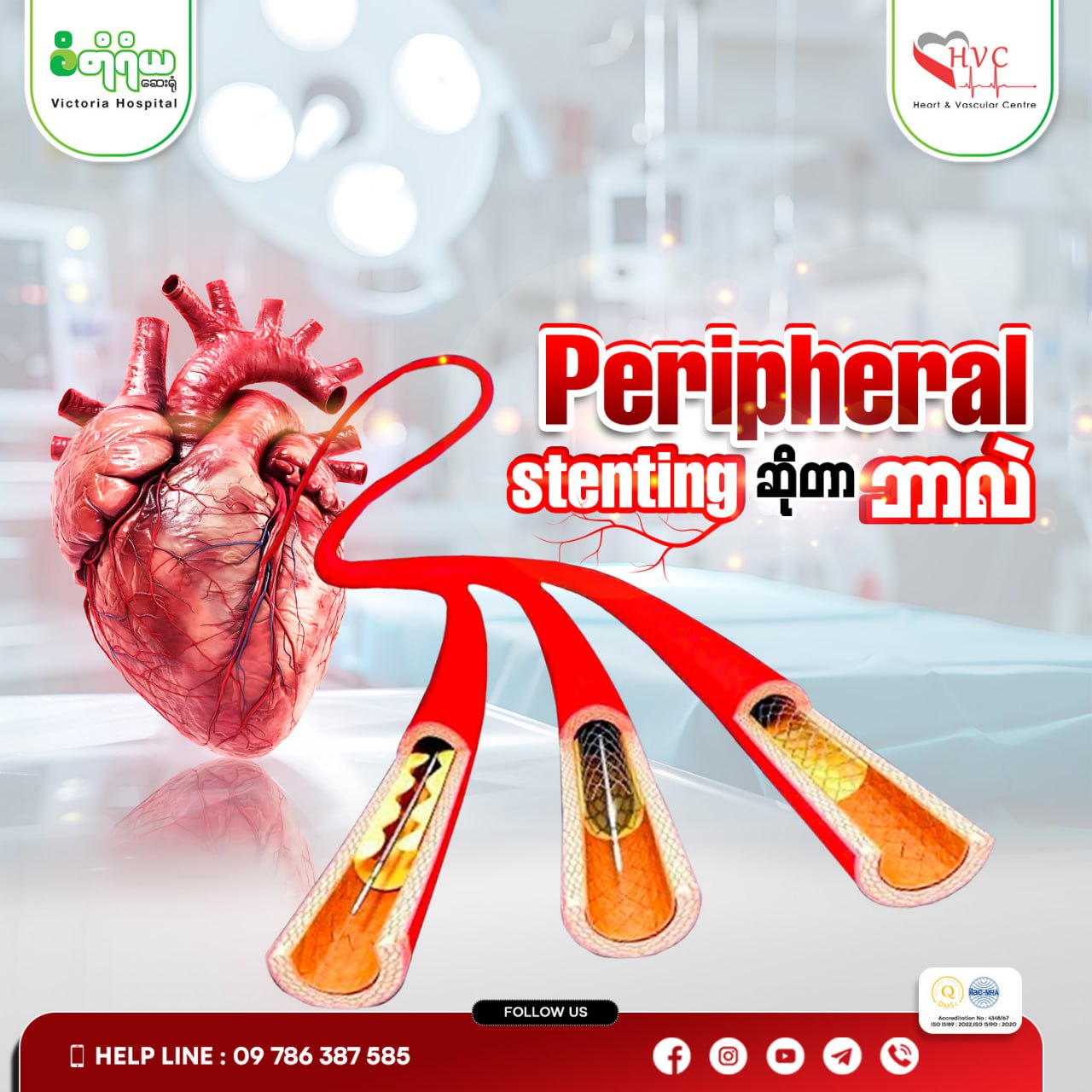
Peripheral stenting is a medical procedure used to open up narrowed or blocked peripheral arteries — the blood vessels that carry blood from the heart to the arms, legs, and other parts of the body. This term usually refers to the arteries in the legs and arms.
The procedure is most often used to treat Peripheral Arterial Disease (PAD). PAD occurs when fatty deposits build up inside the arteries, causing narrowing or blockage. This reduces blood flow to the limbs, leading to symptoms such as pain, cramping, numbness, or slow-healing wounds.
How is Peripheral Stenting Performed?
It is a minimally invasive procedure and usually involves these steps:
📌 Catheter insertion (Catheterization) – The doctor inserts a thin, flexible tube (catheter) into a blood vessel, usually in the groin or wrist, and guides it toward the blockage using X-ray imaging.
📌 Balloon angioplasty – Once the catheter reaches the narrowed section, a small balloon at its tip is inflated. This pushes the fatty deposits against the artery wall, widening the vessel to restore better blood flow.
📌 Stent placement – At the same time, a stent (a small mesh tube made of metal) is placed inside the artery. The stent remains in place permanently to keep the artery open and prevent it from narrowing again.
After the procedure, patients will usually need to take prescribed medications to prevent blood clots and maintain healthy blood flow. Peripheral stenting can significantly improve circulation and relieve symptoms of PAD.
Your Heart and Vascular Care, in Good Hands
At Victoria Hospital’s Heart & Vascular Centre (HVC), we provide advanced diagnosis and treatment for heart and vascular conditions — helping you and your loved ones enjoy a healthy and active life.